 EN
EN
Precision Filling Technology: Achieving ±0.5% Accuracy in Oil Filling Machines
Why ±0.5% Tolerance Is the Industry Benchmark for High-Value Oil Products
The 0.5% volume tolerance standard about oil filling machine applies across edible oils, lubricants, and pharmaceutical products worldwide. This level meets both FDA 21 CFR requirements and EU FIC regulations regarding net content, all while protecting bottom line profits. Traditional manual filling approaches typically result in around 3-5% variation. For medium sized operations, this translates into roughly $740,000 lost each year due to overfilling and wasted product according to recent packaging efficiency studies from 2023. Switching to automated precision filling systems helps bridge this significant gap between what's required and what's actually achieved on factory floors today.
- Regulatory adherence: Guaranteed compliance with statutory net-content requirements
- Brand protection: Avoidance of underfill penalties exceeding $25k per enforcement action
- Cost control: 18–23% reduction in giveaway versus manual operations
| Filling Method | Accuracy Range | Waste per 10k Units |
|---|---|---|
| Manual | ±3% – 5% | 300–500 mL |
| Semi-Automatic | ±1% – 2% | 100–150 mL |
| Automatic | ±0.2% – 0.5% | <20 mL |
How Servo-Driven Piston and Volumetric Systems Deliver Sub-Milliliter Repeatability
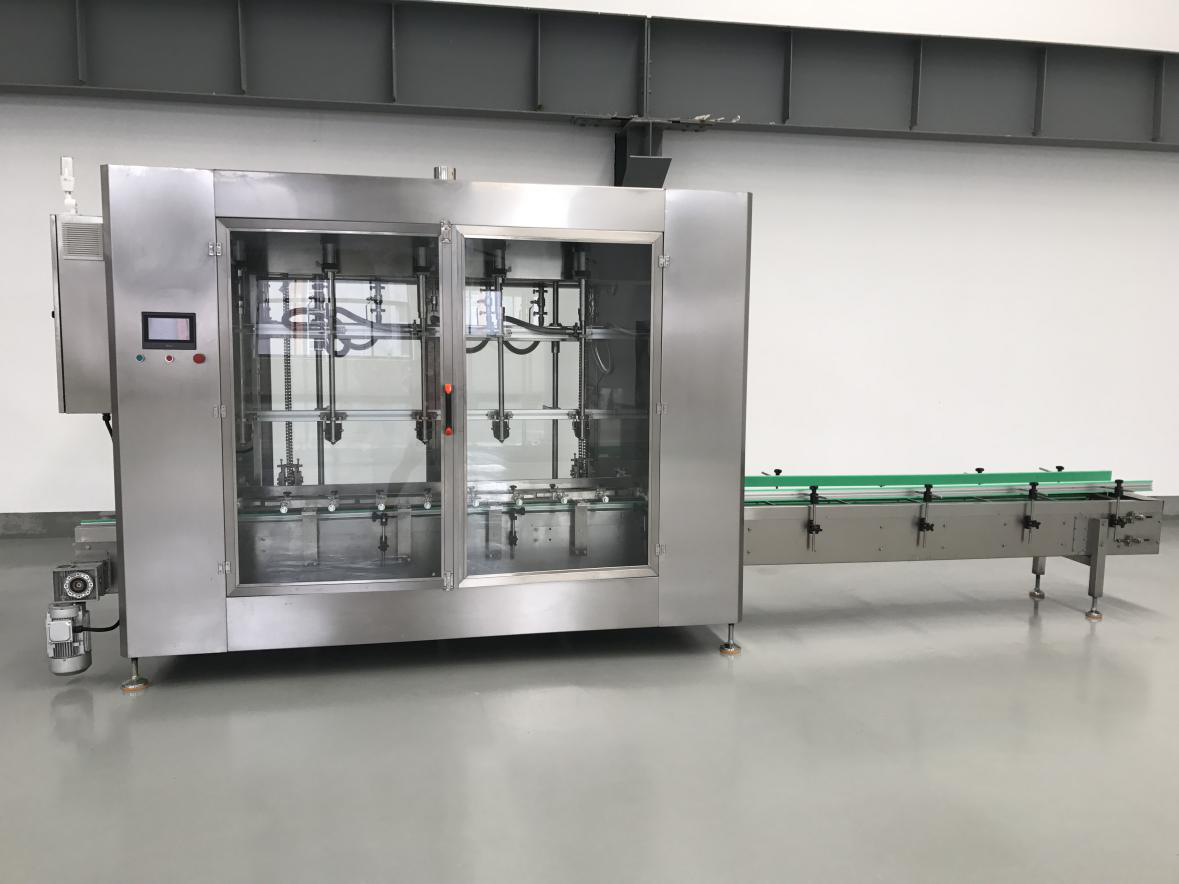
The precision of servo-driven piston systems comes from their ability to move exactly measured amounts of liquid thanks to closed loop controls, which is way better than relying on gravity or timing mechanisms. These systems keep within plus or minus half a percent accuracy even when dealing with all sorts of different fluids ranging from thin solvents right up to thick stuff like 50,000 cP castor oil. They do this because they have pressure sensors built in that automatically adjust for changes in density caused by temperature fluctuations. The systems also feature laser guides to spot containers accurately, cutting down on mistakes and spills, resulting in around 99.8% repeatable performance. For companies producing edible oils specifically, implementing such technology can cut down wasted product significantly, saving approximately 4,200 liters every year according to recent validation tests conducted in 2023.
Real-Time Monitoring and Closed-Loop Control for Fill Consistency
Weight Feedback vs. Electronic Timing: Optimizing Consistency for High-Viscosity Oil
When dealing with oils over 200 cSt like industrial lubricants or those cold pressed cooking oils, most experts will tell us that weight based closed loop control remains the best bet. Load cells that measure actual mass work wonders here because they adjust automatically when densities change due to temperature variations. Just think about it: even a small temperature change of 1 degree Celsius can actually affect vegetable oil volume by around 0.1%. That makes trying to rely solely on volume measurements pretty unreliable at times. Electronic timing methods are another approach but these just set fixed pump durations without adapting to what's happening in real time. What happens? The system starts drifting as the oil gets thicker or thinner. According to recent findings from the Beverage Production Audit back in 2023, using weight feedback instead cut down on product giveaway by nearly 90% compared to old school time based systems. No wonder top manufacturers have started switching to mass based controls for their high viscosity products, maintaining an impressive +/- 0.3% accuracy regardless of which oil grade they're filling.
Smart Sensor Integration and Real-Time Data Analytics in Modern Oil Filling Machines
Today's oil filling systems come equipped with smart sensors connected through the Internet of Things, making thousands of tiny adjustments every second while keeping track of how much oil goes in, pressure changes, and any strange flows happening during operation. All this information gets sent to online analysis tools that can spot problems developing long before they actually break things down, like when nozzles start wearing out or pumps get tired. A refinery recently saw their equipment effectiveness jump to nearly 99% after implementing these smart maintenance warnings based on changes in oil thickness. Special pressure sensors linked via IO-Link technology automatically adjust valves halfway through operations, so there's no need for workers to stop everything just to calibrate manually. Operators now check fill levels using live displays accurate within half a milliliter, which has cut down those pesky labeling mistakes caused by inconsistent fills by almost 40% according to industry standards.
Waste Reduction Strategies Enabled by Automated Oil Filling Machines
Quantifying Waste: Human Overfilling Accounts for 18–23% of Loss in Non-Automated Lines
A recent study published in the Food Production Journal looked at 45 different bottling plants and found that manual filling was responsible for about 18 to 23 percent of all product losses in these non-automated operations. The main reasons? Well, operators just aren't consistent with their techniques, and there's no way to check volumes as they go along something that automated systems take care of right away. Plants that switched over to precision filling systems saw pretty impressive results too. On average, they cut down on wasted materials by around 30% within just one year, which means saving quite a bit of money on those raw ingredients that would otherwise go down the drain.
Integrated Solutions: No-Drip Valves, Drip Trays, Predictive Maintenance, and Operator Training
Leading oil filling systems combine four interdependent technologies to maximize yield and sustainability:
- No-drip valves, engineered with dual-seal actuation, reduce post-fill leakage by 15–20%
- Reclaim drip trays capture residual oil for immediate reuse in blending or reprocessing
- Predictive maintenance sensors identify component wear up to 15% earlier than scheduled service intervals—preventing spill incidents before they occur
- Embedded operator training modules, aligned with FMEA protocols, reinforce error-proofing practices at the point of operation
Together, these solutions eliminate 74% of overfill-related losses and support measurable progress toward ISO 14001 and other sustainability compliance goals.
FAQ
Why is achieving ±0.5% accuracy important in oil filling machines?
Achieving ±0.5% accuracy is crucial because it ensures compliance with regulatory standards, reduces product wastage, and minimizes cost implications from overfilling or underfilling.
How do servo-driven piston systems improve accuracy in oil filling?
Servo-driven piston systems improve accuracy by using closed loop controls and pressure sensors to adjust for changes in fluid density, ensuring precise measurements and reducing spillovers.
What are the benefits of using weight-based closed loop control systems?
Weight-based systems provide more reliable measurements, especially with highly viscous oils, reducing inaccuracies from temperature-induced volume changes and decreasing product giveaways.
How do smart sensors enhance modern oil filling machines?
Smart sensors enable continuous monitoring and data analytics, which can identify potential issues early on, ensuring more consistent performance and reducing the need for manual interventions.
What waste reduction strategies can be implemented through automated oil filling machines?
Automated systems can use no-drip valves, integrated reclaim trays, predictive maintenance sensors, and operator training modules to significantly reduce waste and overfill incidents.
Table of Contents
- Precision Filling Technology: Achieving ±0.5% Accuracy in Oil Filling Machines
-
FAQ
- Why is achieving ±0.5% accuracy important in oil filling machines?
- How do servo-driven piston systems improve accuracy in oil filling?
- What are the benefits of using weight-based closed loop control systems?
- How do smart sensors enhance modern oil filling machines?
- What waste reduction strategies can be implemented through automated oil filling machines?