 EN


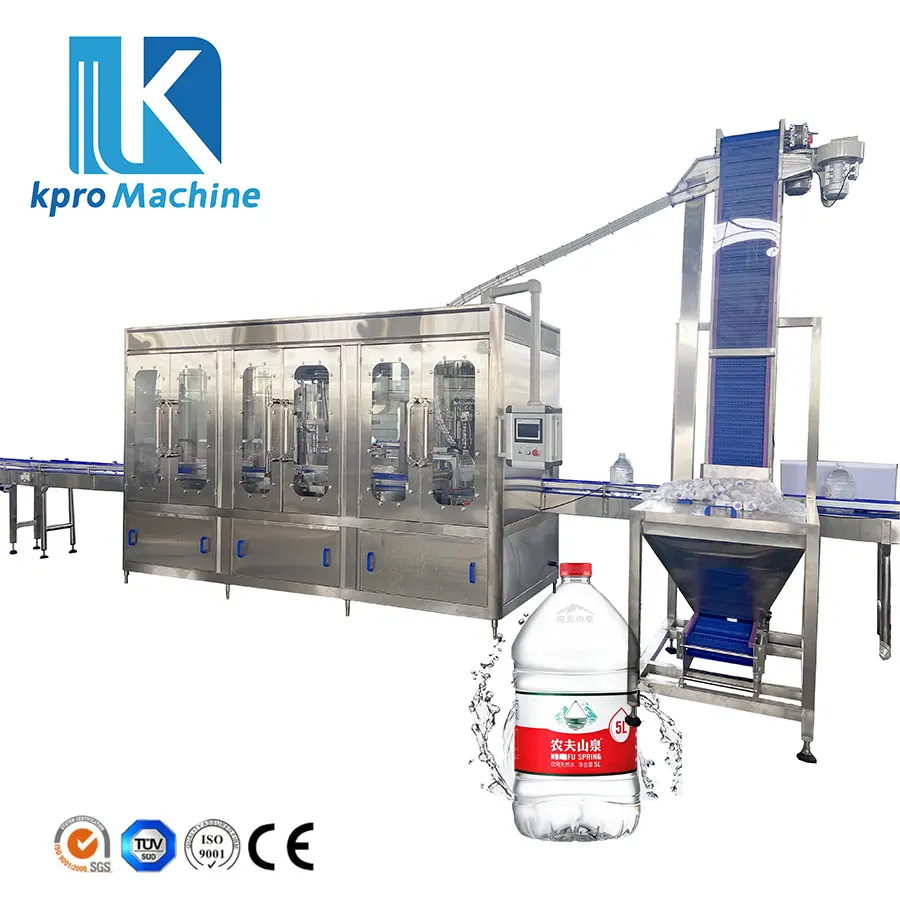
Choosing the right packaging machine is one of the most critical decisions a water factory owner or operations manager can make. Whether you operate a small-scale facility or manage a large industrial plant, the packaging machine you select will directly impact production capacity, product quality, operational costs, and long-term profitability. An inappropriate packaging machine selection can lead to production bottlenecks, quality inconsistencies, increased maintenance expenses, and reduced competitiveness in a market where efficiency determines success.

This guide explores the essential factors that should guide your packaging machine investment, from production volume requirements to technology specifications and vendor support. Understanding these selection criteria will help you evaluate options effectively, avoid costly mistakes, and find a packaging machine that aligns with your factory's current needs and future growth plans. The right packaging machine delivers reliable performance, minimizes downtime, and provides measurable return on investment over its operational lifetime.
Understanding Your Production Capacity Requirements
Determining Daily and Annual Volume Needs
The first step in selecting a packaging machine involves calculating your actual production volume requirements. A packaging machine must match your factory's output targets, not exceed them dramatically or fall short of capacity needs. Small factories typically require packaging machine models rated between 1,000 and 3,000 bottles per hour, while large industrial facilities often need packaging machine systems capable of 5,000 to 15,000 bottles per hour or higher. Understanding your peak production demand ensures the packaging machine can handle maximum throughput without straining equipment or causing bottlenecks.
Calculate your volume based on seasonal variations, market demand trends, and growth projections. Many factory operators underestimate future growth and select a packaging machine with insufficient capacity, leading to expensive upgrades within two years. Conversely, oversizing the packaging machine drives unnecessarily high capital investment and operational complexity. The ideal packaging machine provides comfortable capacity headroom of 10 to 20 percent above your current maximum requirements, allowing flexibility for growth while maintaining energy efficiency and controlled operation.
Evaluating Flexibility and Scalability
Modern factories benefit from packaging machine models that accommodate multiple bottle sizes and container formats. A versatile packaging machine reduces the need for separate equipment investments and allows your factory to respond quickly to market changes or customer requests. Before committing to a specific packaging machine, assess whether the model can be adjusted or upgraded as your business evolves. The best packaging machine combines fixed operational excellence with adjustable components, enabling your factory to serve diverse market segments without sacrificing reliability or requiring complete equipment replacement.
Key Technical Specifications and Performance Metrics
Filling Accuracy and Product Quality Standards
Precision filling represents a critical differentiator among packaging machine options. The packaging machine must deliver consistent fill volumes within tight tolerances, typically plus or minus 0.5 percent or better, to meet regulatory standards and customer expectations. Water products have minimal margin for error, making the packaging machine's accuracy essential for brand reputation and compliance. Advanced packaging machine models employ volumetric or weight-based filling technology with real-time monitoring and automatic correction capabilities, ensuring every bottle meets specification regardless of ambient conditions or minor pressure fluctuations.
Consistent fill accuracy from your packaging machine also reduces product giveaway, where overfilling wastes raw materials and profits. Even a half-percent improvement in fill precision across millions of units annually translates to significant cost savings and competitive advantage. Evaluate the packaging machine's measurement methodology, calibration frequency requirements, and adjustment procedures. Ask vendors to demonstrate the packaging machine's performance under actual operating conditions and request historical accuracy data from existing customers running similar production volumes.
Speed, Throughput, and Operational Efficiency
The packaging machine's speed must align with your production timeline and market demand. Speed is typically measured in bottles per minute or hour, and stated speeds should be verified under real-world conditions, not theoretical maximums. Reputable packaging machine suppliers provide conservative speed ratings that reflect actual performance including brief stoppages for changeovers, minor adjustments, and routine maintenance. A packaging machine that operates at 95 percent of rated capacity continuously outperforms one rated 10 percent faster but achieves only 75 percent actual utilization due to reliability issues or operator complications.
Energy consumption represents another critical efficiency metric for the packaging machine. Modern packaging machine designs minimize compressed air usage, reduce water waste, and optimize motor efficiency, directly affecting your operational cost per unit produced. Request energy consumption specifications from the packaging machine manufacturer and calculate the annual energy cost impact. Over ten years, an energy-efficient packaging machine can save thousands in utility expenses compared to older or less optimized equipment, often justifying a higher initial investment through operational savings.
Reliability, Maintenance, and Support Infrastructure
Machine Durability and Mean Time Between Failures
The packaging machine's reliability directly impacts production consistency and factory profitability. A well-designed packaging machine minimizes unplanned downtime through robust engineering, quality components, and thoughtful operational design. Evaluate the packaging machine's mean time between failures, preventive maintenance requirements, and spare parts availability. Premium packaging machine models from established manufacturers typically require scheduled maintenance every 200 to 400 operating hours, while lower-cost alternatives may need intervention every 100 hours or less. These maintenance intervals compound significantly across annual operating cycles and directly affect your factory's productive capacity.
Material composition and component quality determine the packaging machine's long-term durability in demanding water production environments. Stainless steel construction, food-grade seals, and corrosion-resistant internal surfaces protect the packaging machine from degradation caused by constant water contact and pressure cycling. Examine whether the packaging machine uses standard, widely available replacement parts or proprietary components that lock you into exclusive vendor relationships and premium pricing. A packaging machine built with industry-standard components offers greater long-term flexibility and typically lower total cost of ownership.
Vendor Support and Service Networks
The packaging machine vendor's technical support quality often matters more than the equipment itself during critical production periods. Establish clear expectations about response time, troubleshooting procedures, spare parts delivery, and on-site technician availability before purchasing the packaging machine. Leading packaging machine suppliers maintain service networks across major manufacturing regions, offering rapid response to equipment issues. Small factories particularly benefit from local vendor support, as extended downtime can consume monthly profit margins quickly. Request references from existing customers and inquire specifically about support experiences when unexpected issues arise with the packaging machine.
Implementation Considerations for Different Factory Scales
Small Factory Optimization Strategies
Small factories must maximize value from limited capital budgets, making packaging machine selection especially consequential. Smaller operations often benefit from semi-automatic or compact packaging machine models that reduce floor space requirements and operate efficiently at lower volumes. The ideal packaging machine for small factories balances automation with hands-on control, allowing operators to manage multiple functions without requiring specialized technical expertise. Consider packaging machine models designed specifically for emerging manufacturers, which typically emphasize simplicity, straightforward maintenance, and cost-effectiveness over maximum output capacity.
Small factory owners should prioritize packaging machine suppliers offering flexible financing options and extended warranty periods. These arrangements reduce upfront cash requirements and provide risk protection during the critical early growth phase. Training and ongoing operator support become especially valuable when your factory has limited redundancy in skilled staff. Select a packaging machine vendor committed to customer success through comprehensive initial training, accessible documentation, and responsive technical guidance as your operations scale.
Large Factory System Integration and Automation
Large factories require sophisticated packaging machine systems that integrate seamlessly with upstream processing equipment, downstream packaging operations, and production management software. Enterprise-level packaging machine solutions feature advanced automation, remote monitoring capabilities, and data analytics that enable real-time production optimization. The packaging machine should communicate with your existing quality control systems, inventory management platforms, and production scheduling software, creating a unified operational environment that minimizes manual intervention and human error.
Large facility packaging machine implementations typically involve extended installation periods, comprehensive staff training programs, and gradual ramping to full capacity. Budget for dedicated technical resources and coordination time when integrating sophisticated packaging machine systems into existing production lines. Industrial packaging machine suppliers serving large operations typically provide project management support, system engineering consultation, and customized integration services. The right packaging machine partner understands that large-scale implementations succeed through careful planning, thorough communication, and collaborative problem-solving throughout deployment and the critical ramp-up phase.
FAQ
What is the typical lifespan of an industrial packaging machine?
A well-maintained packaging machine typically operates effectively for 10 to 15 years in continuous production environments. Lifespan depends heavily on utilization rate, maintenance discipline, and operating conditions. Premium packaging machine models from established manufacturers often exceed this timeframe when properly serviced. However, rapid technological advances in energy efficiency, precision control, and automation may make equipment replacement economically attractive before mechanical failure, as newer packaging machine models often deliver substantially lower operating costs and higher throughput capabilities than aging equipment.
How much does a commercial water packaging machine cost?
Packaging machine pricing varies dramatically based on capacity, automation level, and manufacturer reputation. Small semi-automatic packaging machine units suitable for startup operations range from 10,000 to 30,000 dollars. Mid-range fully automatic packaging machine systems cost between 50,000 and 150,000 dollars. Large industrial packaging machine installations for major production facilities exceed 200,000 dollars and may reach several million dollars for highly customized systems. Beyond equipment cost, budget for installation, spare parts inventory, operator training, and ongoing maintenance as part of total packaging machine investment planning.
Can a packaging machine handle different bottle sizes and materials?
Many modern packaging machine models accommodate multiple bottle sizes and materials through adjustable components and changeable parts. Changeover from one bottle size to another on a flexible packaging machine typically requires 15 to 45 minutes of equipment adjustment and recalibration. However, some specialized packaging machine systems perform optimally with specific bottle dimensions or materials, making flexibility limited. Before purchasing, specify which bottle formats your factory requires and verify that the packaging machine can transition between them efficiently. Modular packaging machine designs offer the greatest flexibility for factories serving diverse market segments with varying container specifications.