 EN


Manufacturing facilities across pharmaceutical, food and beverage, electronics, and chemical industries depend on consistently pure water to maintain product quality, protect sensitive equipment, and comply with regulatory standards. Industrial pure water machines have become essential infrastructure in modern production environments, where even trace contaminants can compromise product integrity or cause costly equipment failures. Understanding how these advanced systems ensure high-quality water output requires examining the sophisticated technologies, monitoring mechanisms, and quality control protocols that distinguish industrial-grade purification from basic filtration approaches.

The mechanism through which a pure water machine delivers consistent high-quality output involves multiple purification stages, real-time quality monitoring, and automated control systems that respond dynamically to feed water conditions and production demands. Unlike residential water treatment systems, industrial pure water machines process substantial volumes while maintaining precise water quality specifications that meet industry-specific purity standards. These systems integrate reverse osmosis technology with pre-treatment processes, post-treatment polishing, and continuous quality verification to ensure every liter of produced water meets the exacting requirements of manufacturing processes where water quality directly affects final product characteristics and operational reliability.
Multi-Stage Purification Architecture in Industrial Water Systems
Pre-Treatment Filtration Protecting Core Purification Components
Industrial pure water machines employ comprehensive pre-treatment systems that remove suspended solids, sediment, chlorine, and organic matter before water reaches the reverse osmosis membranes. This initial filtration stage typically includes multimedia filters containing layers of anthracite, sand, and garnet that capture particles down to five microns, preventing membrane fouling that would reduce system efficiency and water quality. Activated carbon filters then remove chlorine, chloramines, and dissolved organic compounds that could damage membrane materials or pass through to contaminate the final product water.
The pre-treatment configuration in a pure water machine directly influences system longevity and output quality by protecting expensive reverse osmosis membranes from premature degradation. Water softening units may be integrated to remove hardness minerals that cause scaling, while specialized oxidizing filters address iron and manganese that could stain products or create biofilm growth sites. This layered approach ensures that only properly conditioned water enters the primary purification stage, maintaining consistent performance across varying feed water conditions and extending membrane service life from months to years in demanding industrial applications.
Reverse Osmosis Membrane Technology Achieving Molecular-Level Separation
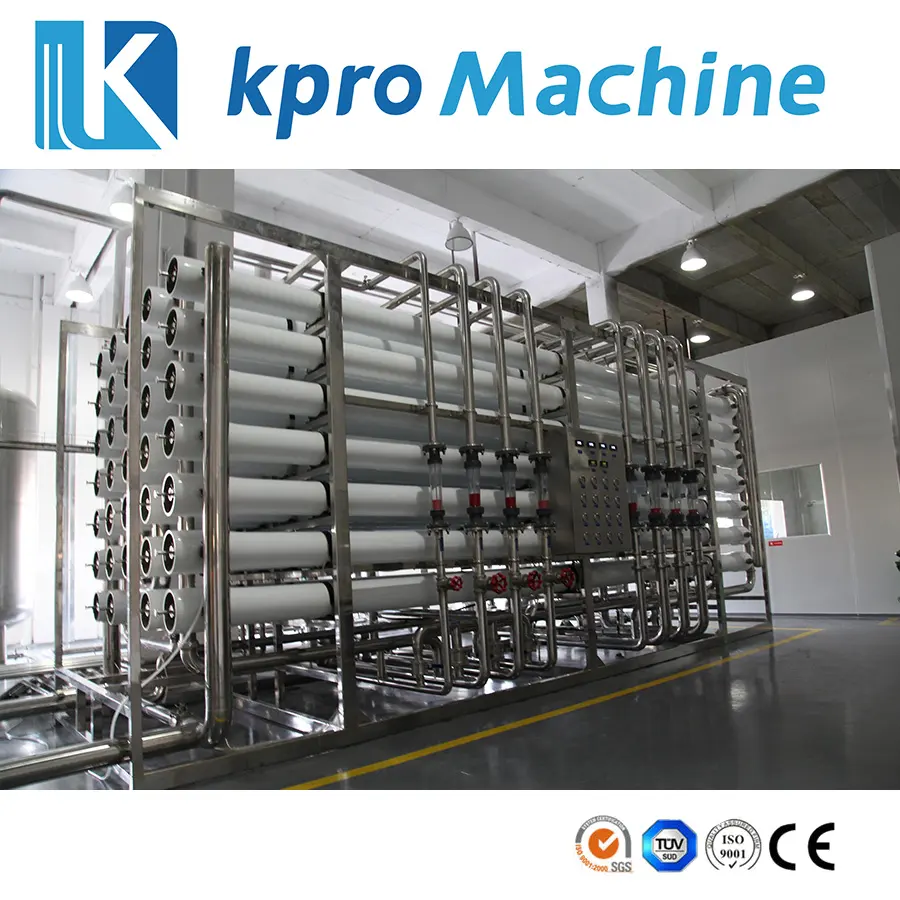
The core purification capability of an industrial pure water machine resides in its reverse osmosis membrane arrays, where applied pressure forces water molecules through semi-permeable membranes while rejecting dissolved salts, minerals, microorganisms, and organic compounds. These thin-film composite membranes feature selective barrier layers with pore sizes measured in angstroms, allowing water passage while blocking particles, ions, and molecules larger than approximately one nanometer. This molecular-level separation achieves rejection rates exceeding ninety-eight percent for most dissolved contaminants, producing permeate water with total dissolved solids typically below ten parts per million.
Industrial systems employ membrane configurations optimized for high recovery rates and consistent quality output under continuous operation conditions. Multi-stage membrane arrays with interstage pumping maintain optimal pressure differentials across each membrane bank, maximizing water production while controlling concentrate stream characteristics. The membrane materials and configuration in a pure water machine determine its ability to handle specific contaminant profiles, temperature ranges, and production volumes while maintaining the stable output quality that manufacturing processes require.
Post-Treatment Polishing for Application-Specific Purity Requirements
Following reverse osmosis purification, industrial pure water machines incorporate post-treatment systems that further refine water quality to meet specialized manufacturing requirements. Electrodeionization units remove residual ionic contaminants without chemical regeneration, producing ultrapure water with resistivity exceeding ten megohm-centimeters for semiconductor manufacturing and pharmaceutical applications. Ultraviolet sterilization systems eliminate microorganisms that might have passed through earlier stages or grown in distribution piping, ensuring biological purity in food processing and medical device manufacturing environments.
Additional polishing stages may include submicron filtration removing particles down to point-two microns, degasification towers stripping dissolved gases, and final activated carbon beds removing trace organics that affect taste or interfere with sensitive manufacturing processes. This post-treatment architecture allows a single pure water machine platform to serve diverse applications within a facility by adjusting final polishing configuration to match specific use-point requirements. The layered approach ensures that even if upstream processes experience temporary performance variations, final output water consistently meets the stringent specifications that prevent product defects and maintain process reliability.
Real-Time Quality Monitoring and Automated Control Systems
Continuous Water Quality Measurement at Critical Process Points
Industrial pure water machines incorporate comprehensive instrumentation that continuously monitors water quality parameters throughout the purification process, enabling immediate detection of performance deviations before they affect output water characteristics. Conductivity sensors installed at multiple locations measure dissolved ion concentrations, providing real-time indication of membrane performance and system effectiveness. Total organic carbon analyzers detect organic contamination that standard conductivity measurements might miss, particularly important in pharmaceutical and electronics manufacturing where organic residues compromise product quality.
Advanced monitoring systems in modern pure water machines track differential pressure across filters and membranes, flow rates through each purification stage, temperature fluctuations, and pH levels that indicate chemical balance changes. This multi-parameter monitoring creates a comprehensive quality profile that allows operators to identify developing issues before they escalate into water quality failures or equipment damage. Data logging systems record all measurements with timestamps, creating audit trails that support quality management systems and regulatory compliance documentation required in validated manufacturing environments.
Automated Feedback Control Maintaining Consistent Output Quality
The control architecture in an industrial pure water machine integrates quality sensors with automated valves, pumps, and treatment dosing systems that adjust operating parameters in response to changing conditions. When conductivity sensors detect increasing dissolved solids in permeate water, the control system may automatically increase membrane flush frequency, adjust cross-flow velocity, or trigger maintenance alerts before quality specifications are violated. This predictive response capability maintains consistent output quality despite variations in feed water composition, production demand, or ambient conditions that affect system performance.
Programmable logic controllers coordinate multiple subsystems within the pure water machine, optimizing recovery rates while protecting water quality and equipment longevity. Automated backwash cycles for multimedia filters initiate based on differential pressure readings rather than fixed time intervals, ensuring efficient operation while preventing channeling that would allow contaminant breakthrough. Chemical dosing pumps adjust antiscalant and pH adjustment chemicals based on continuous feed water analysis, maintaining optimal membrane operating conditions across seasonal water quality variations that would otherwise compromise purification efficiency and output consistency.
Alarm Systems and Quality Assurance Interlocks
Industrial pure water machines implement multi-level alarm systems that alert operators to conditions potentially affecting water quality before manufacturing processes receive non-conforming water. Critical quality parameters trigger immediate alarms and automatic diversion valves that redirect off-specification water to drain rather than allowing it to reach production equipment. This fail-safe architecture prevents a single component failure from compromising an entire production batch, protecting both product quality and expensive manufacturing equipment from damage caused by contaminated process water.
Quality assurance interlocks in sophisticated pure water machine systems prevent operation when essential pre-conditions are not met, such as inadequate feed water pressure, depleted treatment chemical supplies, or non-functional monitoring instruments. These safety mechanisms ensure that the system only produces water when all components function properly and quality verification systems confirm output meets specifications. Remote monitoring capabilities allow facility managers to track pure water machine performance from central control rooms or off-site locations, enabling rapid response to quality alerts and minimizing production disruptions from water system issues.
Contamination Prevention Through System Design and Materials Selection
Sanitary Construction Standards Minimizing Biofilm and Particle Generation
Industrial pure water machines serving pharmaceutical, food, and medical device manufacturing employ sanitary design principles that prevent microbial growth and particle generation within the system itself. Electropolished stainless steel piping with smooth internal surfaces eliminates crevices where bacteria could colonize, while sloped piping configurations prevent stagnant water accumulation that encourages biofilm formation. Tri-clamp connections and diaphragm valves designed for clean-in-place procedures allow thorough sanitization without disassembly, maintaining biological purity throughout system service life.
Material selection for wetted components in a pure water machine directly impacts output quality by preventing leaching of contaminants into purified water. High-grade stainless steel alloys resist corrosion that could introduce metallic ions, while specialized polymers in seals and gaskets avoid plasticizer migration that would increase total organic carbon levels. Component surfaces undergo rigorous cleaning and passivation treatments before installation, removing manufacturing residues and creating protective oxide layers that maintain material integrity during continuous water contact. This attention to materials and construction quality distinguishes industrial pure water machines from consumer-grade systems where component quality significantly affects long-term water purity.
Circulation and Storage Strategies Maintaining Biological Purity
Industrial facilities requiring high-quality water implement distribution loop designs where a pure water machine continuously circulates water through supply piping at velocities exceeding one meter per second, preventing bacterial settlement and biofilm formation that would contaminate use-point water. These recirculation loops maintain elevated water temperature, typically between sixty and eighty degrees Celsius, creating hostile conditions for microbial growth without requiring continuous chemical sanitization that would leave residues in process water. Return lines incorporate heat exchangers that allow the pure water machine feed system to recover thermal energy, improving overall system efficiency.
When water storage is necessary between production and use, industrial pure water machines feed into specially designed tanks with conical bottoms promoting complete drainage, spray ball cleaning systems enabling thorough sanitization, and continuous recirculation preventing stratification and stagnation. Tank vent filters with hydrophobic membranes prevent airborne contamination while allowing pressure equalization during fill and draw cycles. Ultraviolet lamps installed in recirculation lines provide continuous disinfection, maintaining biological purity during extended storage periods. This integrated approach to storage and distribution ensures that water quality leaving the pure water machine remains unchanged until the moment it enters manufacturing processes.
Cross-Contamination Prevention in Multi-Use Facilities
Manufacturing facilities producing multiple product lines or serving different quality requirements implement zoned water systems where a central pure water machine supplies product water that undergoes additional treatment based on specific use-point needs. Dedicated distribution branches serving particularly sensitive applications incorporate point-of-use filtration and final treatment steps that provide additional protection against cross-contamination from shared infrastructure. Back-flow prevention devices at each use point ensure that process fluids cannot reverse into the pure water distribution system during equipment malfunctions or maintenance procedures.
Regular sampling protocols verify that water quality remains consistent throughout the distribution network, with increased monitoring frequency at points furthest from the pure water machine where residence time and potential contamination risks are highest. Validation studies document that the system design maintains specified water quality under worst-case operating conditions, including maximum production loads, seasonal feed water variations, and extended periods between use. This comprehensive contamination prevention strategy ensures that every manufacturing process receives water meeting its quality requirements regardless of facility complexity or production scheduling variations.
Maintenance Protocols and Performance Verification Procedures
Preventive Maintenance Schedules Sustaining Consistent Performance
Industrial pure water machines require structured maintenance programs that replace consumable components before performance degradation affects output quality. Pre-treatment filters undergo scheduled replacement based on differential pressure monitoring and accumulated throughput volumes, ensuring that particulate removal remains effective and membrane protection continues without interruption. Membrane cleaning protocols using specialized chemical formulations remove accumulated foulants and restore permeate flux before irreversible performance decline occurs, extending membrane service life while maintaining consistent rejection rates.
Calibration schedules for quality monitoring instruments ensure that the measurement systems providing operational feedback maintain accuracy throughout service intervals. Conductivity sensors receive regular calibration against reference standards, while pH probes undergo buffer verification and electrode replacement when response times indicate degradation. Pump seals, valve diaphragms, and other wear components receive inspection and replacement according to manufacturer recommendations, preventing unexpected failures that could compromise water quality or cause system downtime. This disciplined maintenance approach keeps the pure water machine operating within design parameters, delivering consistent high-quality water that manufacturing processes depend upon.
Performance Testing and Quality Verification Protocols
Comprehensive performance testing protocols verify that each stage of the pure water machine maintains specified removal efficiency and output quality characteristics. Challenge testing introduces known contaminant concentrations at system inputs and measures removal percentages through analytical testing of output samples, confirming that treatment processes achieve required performance levels. Membrane integrity testing using pressure hold tests or molecular marker studies detects membrane damage that could allow contaminant passage before routine quality monitoring reveals problems.
Routine sampling programs collect water specimens from multiple system locations for laboratory analysis measuring parameters beyond continuous online monitoring capabilities, including specific ion concentrations, microbiological content, and trace organic compounds. Third-party laboratory analysis provides independent verification of water quality, supporting regulatory compliance and quality system documentation requirements in validated manufacturing environments. Trend analysis of historical quality data identifies gradual performance changes that might indicate developing issues requiring intervention before specifications are violated, enabling proactive maintenance that prevents quality failures and maintains continuous high-quality water availability.
Documentation and Regulatory Compliance Support
Industrial pure water machines serving regulated industries incorporate data management systems that automatically record operating parameters, quality measurements, maintenance activities, and performance verification results in secure databases supporting audit trail requirements. Electronic batch records document water quality for each production lot, enabling product recall investigations and quality incident root cause analysis when required by regulatory authorities. Validation documentation demonstrates that system design, installation, and operational procedures consistently produce water meeting predefined quality specifications under all anticipated operating conditions.
Change control procedures ensure that any modification to pure water machine configuration, operating parameters, or maintenance procedures undergoes risk assessment and revalidation before implementation, preventing unintended quality impacts from process changes. Annual system reviews evaluate performance trends, maintenance effectiveness, and regulatory requirement changes that might necessitate system upgrades or procedure revisions. This rigorous documentation and compliance framework provides manufacturing organizations with confidence that their pure water machine consistently delivers the high-quality water essential for product integrity and regulatory compliance across extended operating periods.
FAQ
What water quality levels can industrial pure water machines consistently achieve?
Industrial pure water machines routinely produce water with total dissolved solids below ten parts per million and conductivity under ten microsiemens per centimeter through reverse osmosis purification. Systems incorporating electrodeionization post-treatment achieve ultrapure water specifications with resistivity exceeding ten megohm-centimeters and total organic carbon below fifty parts per billion, meeting semiconductor and pharmaceutical manufacturing requirements. Consistent achievement of these quality levels depends on proper pre-treatment, regular maintenance, and continuous quality monitoring that verifies performance throughout operation.
How do industrial pure water machines handle variations in feed water quality?
Advanced pure water machines incorporate automated control systems that adjust operating parameters in response to feed water quality changes detected through continuous monitoring. Pre-treatment chemical dosing rates automatically increase when raw water hardness or alkalinity rises, preventing membrane scaling that would reduce performance. Multi-stage membrane configurations with interstage monitoring allow the system to maintain target output quality despite seasonal variations in municipal water supplies or well water characteristics by adjusting pressure, flow distribution, and concentrate rejection rates based on real-time quality measurements.
What maintenance frequency do industrial pure water machines require?
Maintenance intervals for pure water machines depend on feed water characteristics, production volumes, and specific system configuration, but typically include weekly inspection of pre-treatment filters, monthly membrane cleaning cycles, quarterly replacement of consumable filter elements, and annual comprehensive system validation. Automated monitoring systems track performance indicators like differential pressure and permeate quality that trigger maintenance activities based on actual operating conditions rather than arbitrary time schedules, optimizing maintenance efficiency while ensuring consistent water quality. Facilities with particularly challenging feed water or high production demands may require more frequent attention to specific components.
Can a single pure water machine serve multiple manufacturing applications with different quality requirements?
Industrial pure water machines commonly supply base purified water to central distribution systems where point-of-use treatment modules provide additional polishing for applications requiring higher purity levels. This approach allows a single primary system to efficiently produce water meeting general manufacturing needs while dedicated electrodeionization units, ultraviolet systems, or ultrafiltration modules at specific use points elevate quality for critical applications. Properly designed distribution systems with appropriate branch treatment and contamination prevention measures enable one central pure water machine to support diverse quality requirements throughout a manufacturing facility while maintaining cost-effective operation and simplified maintenance management.
Table of Contents
- Multi-Stage Purification Architecture in Industrial Water Systems
- Real-Time Quality Monitoring and Automated Control Systems
- Contamination Prevention Through System Design and Materials Selection
- Maintenance Protocols and Performance Verification Procedures
-
FAQ
- What water quality levels can industrial pure water machines consistently achieve?
- How do industrial pure water machines handle variations in feed water quality?
- What maintenance frequency do industrial pure water machines require?
- Can a single pure water machine serve multiple manufacturing applications with different quality requirements?