 EN
EN
Bottle Labeling Machine: Label Placement Methods & Application Precision
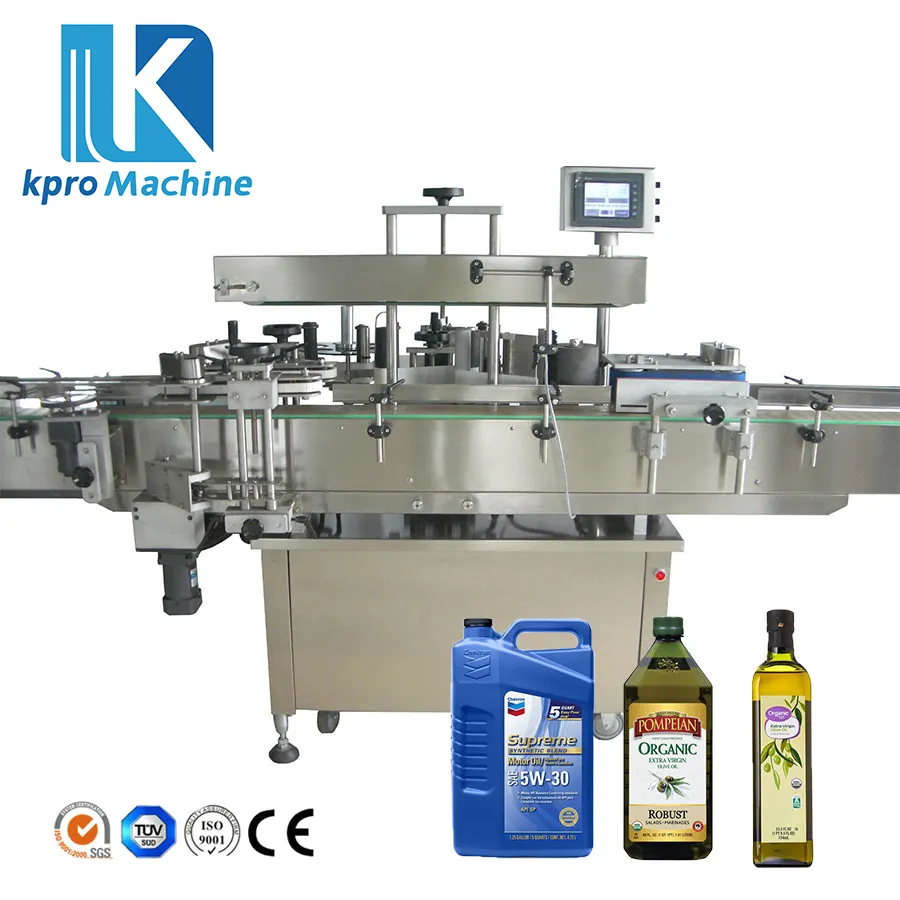
Single-Sided, Double-Sided, Wrap-Around, Top/Bottom, and Bottleneck Labeling Techniques
Today's bottle labeling equipment uses all sorts of clever tricks to handle different container shapes. Most regular round bottles still get labeled just on one side since the brand name only needs to show on the front. But when we're talking about those fancy hexagonal perfume bottles, things get interesting. The machines switch to double sided systems with two applicators working together so the labels look good from every angle. Beverage companies love wrap around labels for their drinks. These require careful tension control so the label goes all the way around without any wrinkles forming on round containers. Pharmaceutical manufacturers need top and bottom labels for all the required text on medicine vials. And then there are special applicators designed specifically for bottle necks. These have tiny nozzles that apply glue precisely to those narrow sections. The best ones can even adjust how thick the adhesive gets depending on whether it's hot or cold in the factory.
Each technique relies on purpose-built mechanics:
- Wrap-around systems use stepper motors and dancer arms to maintain consistent label tension at speeds exceeding 200 units/minute
- Bottleneck applicators integrate micro-nozzles calibrated for precise adhesive dosing
- Double-sided setups employ mirror-image optical sensors to achieve ±0.3mm positional accuracy
Precision Requirements in High-Value Segments: Wine vs. Pharmaceutical Bottle Labeling
The difference in labeling accuracy between luxury drinks and medical products isn't just about how tight the tolerances are, it's about what happens when things go wrong. For wine labels, looks matter most. Top shelf bottles need their gold foil positioned within half a millimeter on those tricky curved surfaces because any wobble ruins the whole premium look customers expect from expensive wines. On the other hand, medicine packaging has to follow strict FDA rules under 21 CFR Part 11. Even something as small as a 1mm shift in label position could block important dosage info or make barcodes unreadable. That kind of mistake isn't just an inconvenience for manufacturers, it actually puts patients at risk which makes these regulations absolutely critical for drug makers to follow precisely.
Pharmaceutical lines rely on integrated vision systems performing real-time 360-degree inspection at up to 150 bottles/minute, automatically rejecting units with skew exceeding 0.5 degrees. This level of precision prevents recalls averaging $740k per incident (Ponemon Institute, 2023) and supports compliance in GMP-certified environments.
Automation Tiers: Matching Bottle Labeling Machine Capabilities to Production Scale
The amount of product being made really affects what kind of automation makes sense. For smaller companies making less than 5,000 units each day, manual labeling stations are still common. They don't cost much to start with but operators have to handle everything from placing bottles to applying labels themselves. When production scales up between around 5,000 to maybe 20,000 units per day, semi-automatic systems become practical. These setups automate the actual labeling process while people still load the products manually. Most manufacturers report getting roughly 40 to 60 percent better speed compared to purely manual work, plus much more consistent results. Large scale operations producing over 20,000 units daily need fully automatic machinery. These advanced systems connect right into existing production lines using robotic arms and sensors to guide movement across conveyor belts. Some can handle upwards of 30,000 bottles every hour with almost no human touch required. The best part? Many include built-in cameras that check for defects and automatically reject faulty items. This feature is especially important in industries where quality control matters most, such as pharmaceutical manufacturing where even minor errors could lead to serious problems.
Facilities anticipating growth should prioritize modular designs that support seamless upgrades from semi-automatic to fully automatic configurations, avoiding costly equipment replacement down the line.
Industry-Specific Bottle Labeling Machine Applications and Compliance Needs
Beverage, Cosmetics, Pharmaceuticals, and Food Packaging: Key Bottle Types and Labeling Demands
The specs for bottle labeling machines can differ quite a bit from one industry to another because containers come in so many different materials, shapes, sizes, and they need labels that last under various conditions. For beverage companies working with PET plastic and glass bottles, speed is everything. They need those wrap around labelers that can keep going at over 50 thousand bottles per hour straight through shifts. The cosmetics sector faces totally different demands when it comes to those fancy glass perfume bottles with their odd shapes. Even a tiny mistake matters here - something as small as 0.1 mm off center will send those bottles straight to the reject pile since appearance counts so much in this market. Pharmaceutical operations have their own set of strict requirements too. Every single vial needs to be checked right there on the production line, and manufacturers won't accept anything above half a percent errors in labeling. Then there's food packaging which throws two big technical hurdles at equipment designers. First, getting adhesives that stick properly even after exposure to oils from things like salad dressings or sauces. Second, making sure the machinery works reliably in cold storage areas where dairy products are packaged, despite the challenging temperature conditions.
Key industry contrasts:
- Beverages: High-speed pressure-sensitive labeling for PET/glass
- Cosmetics: Multi-surface capability (metallic, transparent, textured labels)
- Pharma: Serialization, tamper-evident features, and full traceability
- Food: FDA-compliant adhesive formulations and allergen statement integrity
Regulatory Alignment: Why GMP and FDA Environments Require Purpose-Built Bottle Labeling Machines
Regulated industries face severe financial and reputational consequences for labeling non-compliance—pharmaceutical recalls alone average $740k per incident (Ponemon Institute, 2023). Off-the-shelf labeling machines lack foundational features required under GMP and FDA frameworks: material traceability logs, cleanroom-rated construction, and validation-ready electronic records aligned with 21 CFR Part 11 and EU Annex 11.
Purpose-built systems address these needs through stainless steel contact surfaces, integrated vision inspection, and audit-trail-capable software. These capabilities prevent critical failures—including mislabeled drug concentrations, omitted lot numbers, or missing allergen warnings—ensuring both regulatory adherence and consumer safety.
FAQ
What are the different methods for bottle labeling?
Single-sided, double-sided, wrap-around, top/bottom, and bottleneck labeling techniques are common methods used based on container shapes and industry requirements.
How do automation tiers affect bottle labeling?
Automation tiers in bottle labeling depend on production scale: manual systems for under 5,000 units/day, semi-automatic for 5,000-20,000, and fully automatic for over 20,000 units/day.
Why is regulatory compliance important in bottle labeling for pharmaceuticals?
Regulatory compliance ensures patient safety and adherence to strict guidelines, preventing critical labeling errors that could endanger consumers.
Why do different industries have varying labeling requirements?
Different industries have varied bottle types and conditions, which affect labeling demands in terms of speed, precision, and regulatory compliance.