 EN
EN


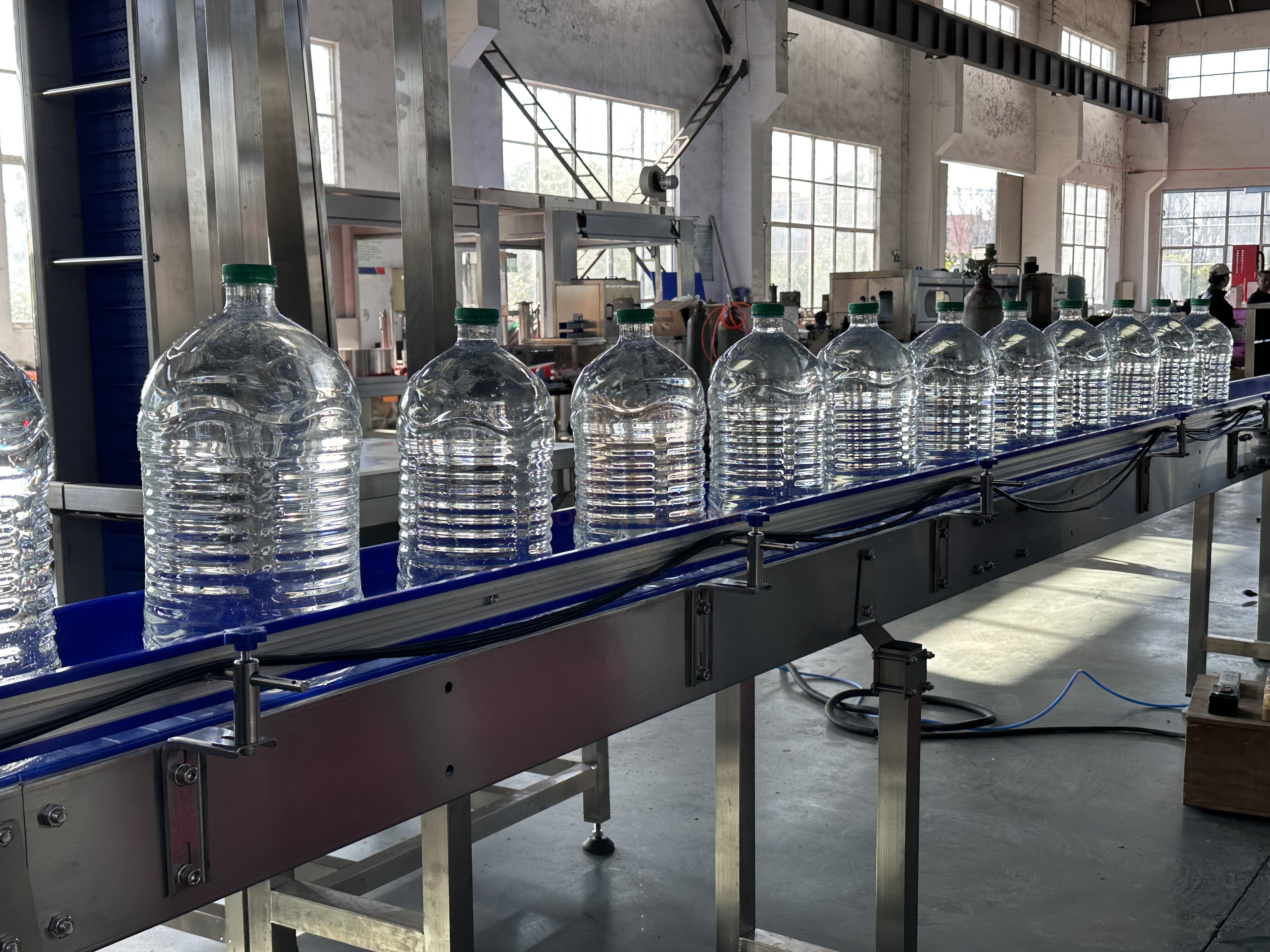
Precision Filling Technology for Water: Accuracy, Repeatability, and Drip-Free Operation
Achieving volumetric precision within ±0.2% tolerance is non-negotiable in modern water filling machine operations—underfilling risks regulatory non-compliance, while overfilling directly erodes margin and sustainability. Industry data confirms that precision filling systems reduce product waste by up to 15%, with the greatest impact seen in high-volume purified and carbonated water lines.
Comparative Performance of Pump Systems in Water Filling Machines: Piston vs. Gear vs. Peristaltic
Pump selection fundamentally shapes accuracy, hygiene, and application fit across bottle formats and fluid types:
| Pump Type | Accuracy | Contamination Risk | Ideal Application |
|---|---|---|---|
| Piston | ±0.1% | Low | Still water, glass bottles |
| Peristaltic | ±0.3% | None (tube replacement) | Flavored waters, pharmaceuticals |
| Gear | ±0.5% | Medium | High-viscosity beverages |
Peristaltic systems dominate purified and sensitive water applications due to zero fluid-contact part contamination, while piston pumps deliver unmatched repeatability for carbonated variants where pressure stability and volume consistency are critical.
Real-Time Volume Calibration and ±0.2% Tolerance Assurance via Load Cells and Encoder Feedback
Today's water filling equipment combines load cells alongside high resolution rotary encoders for real time calibration of fill amounts. The sensors pick up even small shifts in container positions as they move along conveyor belts, which then causes tiny adjustments happening inside just 50 milliseconds. What this means is that the system keeps fill volumes consistent within plus or minus 0.2 percent. Pretty impressive when considering all sorts of factors like machine vibrations, temperature changes throughout the day, or normal wear and tear on parts over time. And best of all, operators don't need to constantly stop production for recalibrations anymore.
Anti-Drip Nozzle Engineering and Its Role in Preventing Bottle Neck Contamination
Hydrophobic-coated, vacuum-assisted nozzles with precisely angled tips eliminate post-fill drips—preventing label adhesive failure, cap contamination, and microbial growth on bottle necks. Leading designs feature 0.08mm laser-cut orifices that disrupt fluid cohesion, reducing residual droplets by 97% versus conventional nozzles and supporting reliable downstream labeling and capping.
Intelligent Automation and Control Architecture of Modern Water Filling Machines
PLC-Driven Synchronization: Integrating Conveyors, Fillers, and Cappers into a Unified Line
PLCs act like the brain behind modern water packaging automation systems, linking together conveyors, filling stations, and capping machines through real time Ethernet/IP or Profinet connections. The servo driven motion control keeps bottles moving exactly where they need to go, maintaining smooth product flow throughout the line. When something gets stuck, built in sensors automatically shut down sections of the machine before damage occurs, cutting down on wear and tear by around 40% for high speed operations over 500 units per minute. Having everything controlled from one central point means fewer slowdowns when switching between different product batches or changing package formats mid run.
HMI Interface Design and Predictive Fault Diagnostics for Minimal Downtime
Today's HMI systems make sense of all that complicated operational information through easy-to-read dashboards filled with colors, trends, and smart alerts when something looks off track. These systems actually have built-in prediction software that keeps checking data coming from various points in the system like flow meters, pressure sensors, and motor current monitors. The software can spot problems developing in components long before they break down completely – think about worn out valve seats or weakening torque in servo motors for instance. Companies adopting this proactive approach see roughly half the unexpected downtime compared to old school reactive maintenance methods. Plus, touchscreens guide operators through changing over production lines for different bottle sizes and closures without wasting time on manual adjustments.
Hygienic Construction and Compliance: Stainless Steel Build and Aseptic Validation for Water Filling Machines
EHEDG/ISO 14159 Compliance, CIP/SIP Integration, and Material Certification for Purified Water Lines
For water filling operations dealing with purified, pharmaceutical grade, or functional waters, meeting strict hygiene requirements is absolutely essential. Following EHEDG standards along with ISO 14159 means product contact areas need to be smooth without cracks, able to drain properly, and easy to inspect regularly. Important parts like nozzles, valves, and manifold assemblies are made from 316 stainless steel that has been officially certified. This material choice stands up better against corrosion and helps control microbial growth over time. Modern systems now come equipped with built-in CIP and SIP cleaning processes that run chemical treatments and heat cycles without needing to take anything apart. These features prevent those pesky biofilms from forming in hard to reach corners or hidden spots within the system. Every material that touches the water carries proper FDA and EU approvals for food contact applications, so there's no risk of substances leaching into drinking water even after long periods of contact. This attention to detail maintains water quality right from when it first enters the machine until the final capping and labeling steps are completed.
FAQ
What is the significance of ±0.2% tolerance in water filling?
Maintaining a ±0.2% tolerance ensures precise fill volumes, reducing product waste and maintaining compliance with regulatory standards.
Which pump system is best for carbonated water?
Piston pumps are ideal for carbonated water due to their unmatched repeatability and ability to maintain pressure stability.
What materials are recommended for maintaining hygiene in water filling machines?
316 stainless steel is recommended for its resistance to corrosion and ability to control microbial growth over time.