 EN
EN
Real-Time Fill Level Monitoring with High-Fidelity Sensors
Capacitive and Ultrasonic Sensors for Dynamic Oil Level Detection in Oil Filling Machines
Modern oil filling machine relies on non-contact technologies such as capacitive and ultrasonic sensors to hit around 0.2% accuracy even during fast-paced manufacturing runs. The capacitive type works by sensing changes in dielectric constants when oil touches the electrodes, which makes them great for conductive substances like synthetic lubricants we see so much of nowadays. For ultrasonic sensors, they basically track how long it takes sound waves to bounce back from the liquid surface, giving really fine detail about levels without actually touching anything. When connected to PLC systems, these sensors create a feedback loop that stops the flow right around 99.8 to 100.2 percent of the desired amount. This matters a lot when dealing with high-end synthetic oils that can cost over seven hundred forty dollars per liter. Switching from old school mechanical float systems to this sensor tech cuts down on wasted product by about 18%, all while keeping production rates well above 120 containers every minute. Manufacturers love this because it saves money without slowing things down.
Compensating for Viscosity and Temperature Variability to Maintain Accuracy
High-fidelity systems counteract viscosity shifts and thermal expansion—historically responsible for ±5% volume deviations—using dynamic compensation algorithms. As temperature changes, oil density shifts by approximately 0.00065 g/mL per °C; uncorrected, this introduces measurable fill errors in bulk operations. Modern solutions address this through:
- Real-time dielectric constant monitoring to infer viscosity changes
- Integrated PT100 temperature probes sampling at 10 ms intervals
- Adaptive algorithms that recalibrate flow parameters mid-cycle
For instance, when filling 15W-40 motor oil (110–140 cSt), these systems maintain accuracy within ±0.15% across ambient temperatures from 15°C to 40°C—eliminating manual temperature tables and reducing material waste by 23% in high-volume facilities.
Precision Control via Industrial PLC Systems in Oil Filling Machines

The heart of today's oil filling machines lies in their Programmable Logic Controllers (PLCs). These controllers manage the incredibly fast communication between valves opening and closing and the sensors measuring flow rates, all within fractions of a second. The precise timing helps avoid those annoying delays that used to plague older systems, causing them to dispense the wrong amount of oil over time. Modern machines use sophisticated PID algorithms that constantly tweak how much oil gets pumped based on what they sense about the oil's thickness and temperature right then and there. Even when different types of oil with varying densities come through the system, these smart adjustments keep the fill volume accurate to within half a percent most of the time.
High-Speed I/O Synchronization and PID Tuning for Consistent Flow Regulation
Getting accurate flow control really depends on those super fast input/output responses, often below a millisecond. The PLC takes in those analog signals from mass flow meters and converts them into pump control pulses that need to be just right in timing. These closed loop PID algorithms are constantly checking what the system wants versus what it's actually doing, adjusting as needed when there are changes in line pressure. We've seen these systems cut down both overfilling and underfilling problems quite dramatically, around 83 percent better than old fashioned timer based approaches according to our field tests last year. Makes sense since timers can't react to real time conditions the way these smart controllers do.
Deterministic vs. Adaptive Logic: Optimizing PLC Performance in Variable-Blend Oil Filling Lines
Deterministic logic works pretty well for single viscosity production lines, but when dealing with different oil blends that have varying rheological properties, manufacturers are turning to adaptive systems powered by machine learning algorithms. These smart systems look at past filling records to figure out the best way to slow down as nozzles close, which cuts down on errors significantly. We've seen real world results where deviations drop from around plus or minus 1.2 percent down to just 0.3 percent across multiple products running through the same line. Big names in manufacturing have started implementing these adaptive setups especially for tricky applications like biodiesel production and synthetic lubricants where the viscosity range can stretch beyond 200 centistokes. The difference this makes in quality control is substantial enough that many companies view it as essential rather than optional these days.
Seamless Sensor-PLC Integration for Sub-0.2% Volume Deviation
PROFINET and EtherNet/IP Fieldbus Architectures Enabling <50ms Closed-Loop Feedback
Industrial Ethernet protocols like PROFINET and EtherNet/IP enable reliable communication between sensors and PLCs, often hitting sub 50 ms response times in closed loop systems. These network setups tie together detailed viscosity readings and temperature measurements with valve control commands so operators can make immediate flow adjustments. Capacitive sensors spot when fill levels start going off track, prompting the PLC to tweak pump speeds and adjust nozzle positions on the fly. The system processes around 1,000 input/output updates every second during operation. Such fast feedback helps compensate for pressure drops along production lines and unexpected viscosity shifts, keeping volume measurements accurate to within plus or minus 0.2 percent even when running at 300 bottles per minute pace. Plants that switch to these modern protocols typically see about a 30 percent drop in calibration issues compared to older serial network configurations.
Case Study: Zhangjiagang Kpro’s Integrated Oil Filling Machine Achieving ±0.15% Accuracy
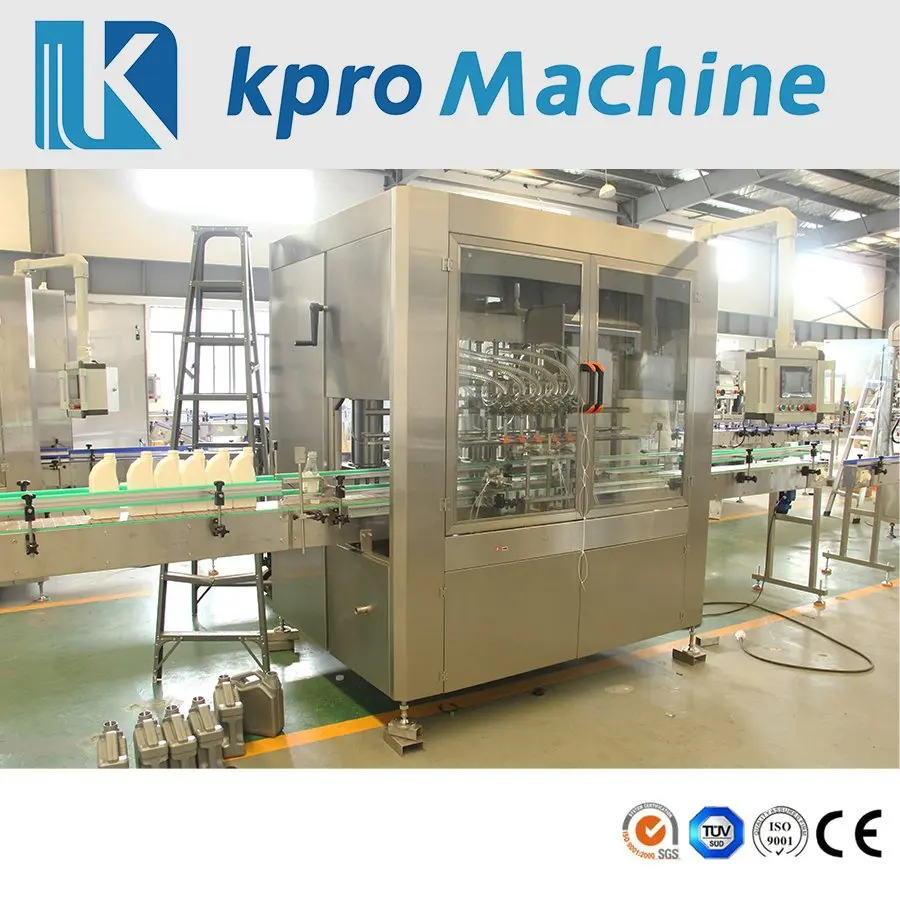
The Zhangjiagang Kpro system reached around 0.15% volumetric accuracy by combining sensors and PLCs really well. They used EtherNet/IP to get sensor signals to controllers in under 35 milliseconds, plus they had those smart PID algorithms adjusting based on what the density measurements told them in real time. When they tested it at high speeds with different types of edible oils, the system handled changes in viscosity caused by temperature fluctuations pretty effectively, which cut down on overfilling problems. Looking at their performance numbers, there was about a 40% drop in product giveaway compared to standard filler systems, and it kept up close to 99.7% accuracy even after processing over half a million containers. What this shows is that when manufacturers invest in these deterministic network setups along with properly timed control loops, they can achieve almost no variation in their filling processes anymore.
FAQ
What is the importance of using capacitive and ultrasonic sensors in oil filling machines?
These sensors enable high accuracy in detecting oil levels without contact. Capacitive sensors detect changes in dielectric constants, suitable for conductive substances, while ultrasonic sensors measure the time for sound waves to bounce back, offering precise level details. They reduce waste and maintain production efficiency.
How do oil filling machines compensate for temperature and viscosity changes?
The systems utilize real-time dielectric constant monitoring, PT100 temperature probes, and adaptive algorithms to adjust flow parameters dynamically. This minimizes errors in fill volumes due to temperature-induced changes in oil density.
What is the advantage of using PROFINET and EtherNet/IP protocols in sensor-PLC integration?
These protocols enable swift communication for real-time adjustments, ensuring fill level accuracy and reducing calibration issues by around 30% compared to older serial configurations.
What role do PLC systems play in oil filling machines?
PLCs manage rapid communication between valves and sensors for precise control, using PID algorithms to adjust oil pumping in real time. This enhances accuracy in fill volumes, even with different oil types exhibiting varying densities.
Table of Contents
- Real-Time Fill Level Monitoring with High-Fidelity Sensors
- Precision Control via Industrial PLC Systems in Oil Filling Machines
- Seamless Sensor-PLC Integration for Sub-0.2% Volume Deviation
-
FAQ
- What is the importance of using capacitive and ultrasonic sensors in oil filling machines?
- How do oil filling machines compensate for temperature and viscosity changes?
- What is the advantage of using PROFINET and EtherNet/IP protocols in sensor-PLC integration?
- What role do PLC systems play in oil filling machines?